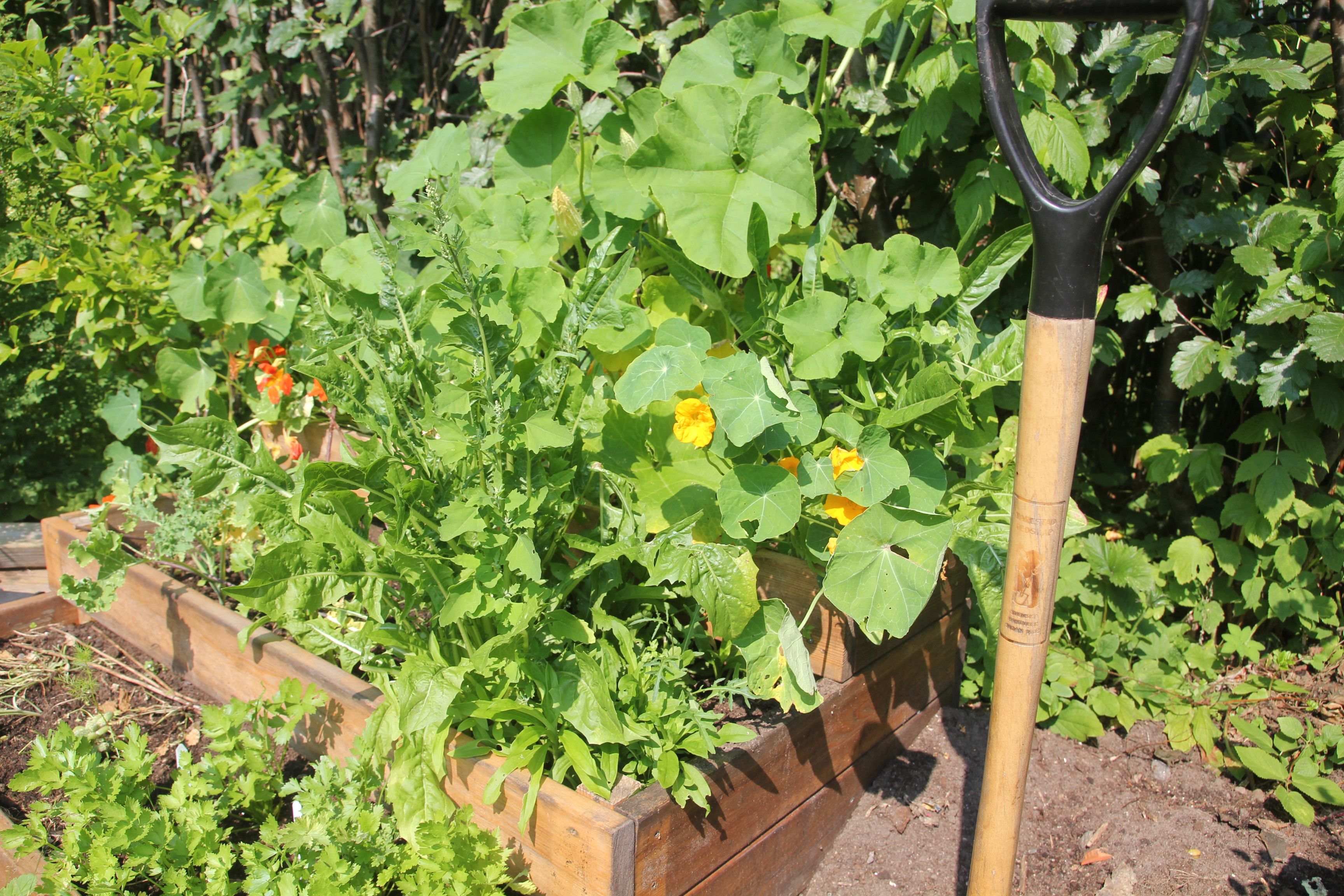
A raised bed is simply a defined growing area held above the surrounding ground, usually inside a frame. On a small plot the appeal is practical rather than decorative: the soil warms earlier in spring, drainage is easier to manage, and the separation between path and bed means the growing soil is rarely compacted underfoot.
Deciding on bed dimensions
The single most useful constraint is reach. A bed that can be tended from both long sides without stepping into it keeps the soil loose. In practice this points to a width of roughly 1.2 metres, with a comfortable bed placed against a wall or fence about half that, since it is reached from one side only.
Length is flexible and usually set by the plot. Height depends on what sits underneath: a bed on open soil can be shallow, while a bed over paving or a balcony needs more depth so roots have somewhere to go.
- Free-standing bed: around 1.2 m wide, reachable from both sides.
- Bed against a wall: around 0.6 m wide, reachable from the front.
- Paths between beds: wide enough for a wheelbarrow or kneeling, not an afterthought.
Frame materials
Untreated or naturally durable timber is the common choice and is easy to cut to size. Boards will weather and eventually need replacing, which is a fair trade for a low-cost, repairable frame. Where longevity matters more than budget, stone, brick, or metal edging last far longer but cost more and are harder to adjust later.
Filling the bed
Deeper beds can be filled in layers, with coarser woody material at the base and finer compost and topsoil above. This uses bulky garden material productively and reduces the volume of bought soil needed. As the lower layers decompose, the level drops, so topping up with compost each season is normal.
- Coarse woody prunings or branches at the base of a deep bed.
- Leaves, spent plants, and rougher compost in the middle.
- Finished compost mixed with topsoil as the planting layer on top.
A note on the German season
Across much of Germany the last frosts can linger into May, which is why tender crops are often started under cover and moved out later. Raised beds help here because the confined soil warms sooner than open ground, giving a little more flexibility at either end of the season.
For background reading on bed preparation and growing techniques, the Royal Horticultural Society publishes general horticultural guidance. Continue with the related notes below.